University Selection
Your comprehensive guide to choosing the right German university for your academic journey
Why University Selection Matters
Selecting the right university in Germany is a pivotal step toward achieving your academic and professional goals. With over 400 higher education institutions offering diverse programs, making an informed decision requires careful consideration of multiple factors including academic reputation, program offerings, location, costs, and career prospects.
This guide provides essential information to assist you in making an informed decision that aligns with your academic interests, career objectives, and personal preferences.
Types of Higher Education Institutions in Germany
Germany offers a diverse range of higher education institutions, each with distinct characteristics and focus areas. Understanding these differences is crucial for selecting the right fit for your academic and career goals.

Universities (Universitäten)

Universities of Applied Sciences (Fachhochschulen)

Colleges of Art, Film & Music
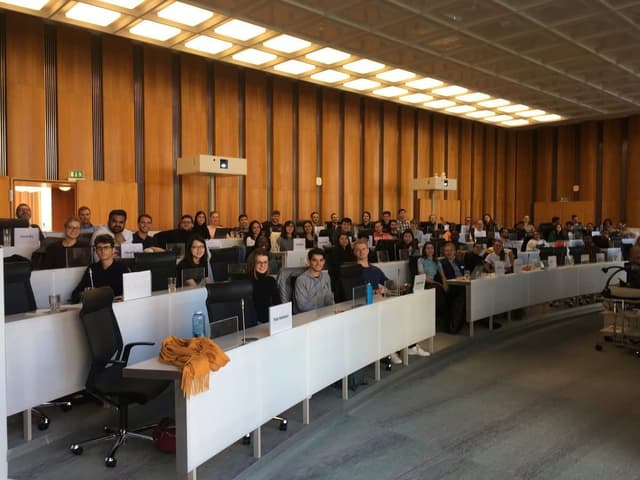
Private Universities
Top Universities in Germany
Germany is home to numerous prestigious universities renowned for their academic excellence, research contributions, and global recognition. Here are some of the top-ranked institutions according to QS World University Rankings 2025:
| University Name | QS Ranking 2025 | Notable Specializations | Semester Fee (€) |
|---|---|---|---|
| Technical University of Munich (TUM) | 28 | Electrical, Mechanical, Computer Science, Aerospace, Robotics | 200-300 |
| RWTH Aachen University | 99 | Mechanical, Electrical, Civil, Industrial Engineering | 300-350 |
| Karlsruhe Institute of Technology (KIT) | 102 | Mechanical, Electrical, Mechatronics, Energy, IT | 200-300 |
| Technical University of Berlin | 147 | Civil, Mechanical, Electrical, Computer Science, Environmental | 300-350 |
| University of Stuttgart | 179 | Automotive, Aerospace, Mechanical, Electrical Engineering | 150-200 |
| Technical University of Darmstadt | 241 | Electrical, Telecommunications, AI, Industrial Engineering | 200-300 |
Key Factors to Consider When Selecting a University
Making the right university choice requires evaluating multiple factors. Consider the following aspects to ensure your selection aligns with your goals:
1. Academic Reputation & Rankings
Consider the university's ranking, research output, and reputation in your field of study. Higher-ranked universities often provide better research opportunities, industry connections, and global recognition.
- Check QS World University Rankings, Times Higher Education, and subject-specific rankings
- Research the university's reputation in your specific field
- Look into faculty qualifications and research achievements
- Consider alumni success stories and career outcomes
2. Program Offerings & Curriculum
Ensure the university offers programs that match your academic interests and career goals. Review the curriculum, course structure, and specialization options.
- Check if the program is available in English or German
- Review course modules and curriculum structure
- Look for specialization tracks or elective options
- Consider internship or practical training opportunities
- Check for research opportunities and thesis options
3. Location & Living Costs
The city and region where you study significantly impact your living expenses, lifestyle, and career opportunities. Consider both the location and associated costs.
- Research living costs in different German cities (Munich and Hamburg are more expensive than smaller cities)
- Consider proximity to industry hubs for internships and job opportunities
- Evaluate public transportation and connectivity
- Check accommodation availability and costs
- Consider cultural and lifestyle preferences
4. Admission Requirements & Eligibility
Each university has specific admission criteria. Ensure you meet the requirements before applying to avoid wasted time and effort.
- Check academic qualification requirements (equivalent to Abitur for Bachelor's)
- Verify language proficiency requirements (German or English)
- Review subject-specific prerequisites
- Check if your qualifications are recognized (use Anabin database)
- Understand application procedures (uni-assist or direct application)
5. Career Prospects & Industry Connections
Consider the university's industry partnerships, career services, and employment rates of graduates in your field.
- Research industry partnerships and company collaborations
- Check career services and job placement support
- Look into internship and co-op opportunities
- Review graduate employment statistics
- Consider alumni network strength in your target industry
6. Scholarships & Financial Support
While public universities don't charge tuition fees, consider available scholarships and financial aid options to support your living expenses.
- Research university-specific scholarships
- Check for Deutschlandstipendium (€300/month for high-achieving students)
- Look into DAAD scholarships and other funding options
- Consider part-time work opportunities (120 full days or 240 half days per year)
- Review financial aid and support services
Recognition of Foreign Qualifications
Before applying to German universities, it's essential to verify that your previous academic qualifications are recognized in Germany. This is a crucial step in the application process.
Anabin Database
The Anabin database is the official resource for evaluating foreign academic degrees and institutions. It helps determine whether your qualifications are equivalent to German standards.
- H+ Rating: Indicates that your university is recognized in Germany
- H- Rating: Means the university is not recognized
- H+/- Rating: Partial recognition - check specific requirements
Always verify your university's status in the Anabin database before applying to ensure your qualifications will be accepted.
APS Certificate (For Indian Students)
Students from India must obtain an APS (Academic Evaluation Centre) certificate, which verifies the authenticity of their academic documents. This is mandatory for visa applications and university admissions.
Application Process Overview
The application process for German universities involves several key steps. Understanding this process helps you prepare effectively and submit strong applications.
Research & Select Programs
Identify programs that align with your academic interests and career objectives. Use university websites, DAAD database, and program finders.
Check Admission Requirements
Review specific criteria for each university including academic qualifications, language proficiency, and subject prerequisites.
Prepare Documents
Gather certified copies of transcripts, language certificates, statement of purpose, recommendation letters, and CV.
Submit Applications
Apply through uni-assist portal or directly to universities, depending on the institution's process. Pay attention to application deadlines.
Application Deadlines
Winter semester (October start): Apply by July 15th. Summer semester (April start): Apply by January 15th. Some programs have earlier deadlines.
Wait for Response
Universities typically respond within 4-8 weeks. Check your application status regularly and respond promptly to any requests.
Required Documents for University Applications
Prepare these documents well in advance to ensure a smooth application process. Requirements may vary slightly between universities, so always check specific requirements for each program.
- Certified Academic Transcripts: Official copies of your previous academic records, translated if necessary
- School Leaving Certificate: Equivalent to German Abitur (for Bachelor's programs)
- Language Proficiency Proof: TOEFL/IELTS for English programs; TestDaF/DSH for German programs
- Statement of Purpose (SOP): Personal essay explaining your motivation, goals, and why you chose the program
- Letters of Recommendation: Usually 2-3 letters from professors or employers
- Curriculum Vitae (CV): Detailed resume highlighting your academic and professional background
- Portfolio: Required for creative programs (art, design, architecture)
- APS Certificate: Mandatory for Indian students
- Proof of Financial Resources: Blocked account statement or scholarship confirmation
- Passport Copy: Valid passport with sufficient validity
Useful Resources & Tools
Leverage these official resources and tools to research universities, programs, and application procedures:

DAAD (German Academic Exchange Service)

Uni-Assist Portal

Anabin Database

Study in Germany Portal

Make it in Germany

University Websites
Next Steps
Once you've selected your preferred universities, take these next steps to ensure a successful application:
Create University Shortlist
Select 3-5 universities that best match your academic interests, career goals, and personal preferences
Contact Admission Offices
Reach out to university admission offices with any specific questions about programs or requirements
Prepare Required Documents
Start gathering and certifying all necessary documents well in advance of application deadlines
Complete Language Tests
Take language proficiency tests (IELTS/TOEFL for English or TestDaF/DSH for German) if not already completed
Draft Application Materials
Begin writing your Statement of Purpose and request recommendation letters from professors or employers
Set Up Application Tracking
Create a system to monitor application deadlines, requirements, and submission status for each university
Apply to Multiple Universities
Submit applications to several universities to increase your chances of acceptance
Get Personalized Guidance
For personalized guidance on university selection and application support, book a free consultation with our expert advisors who can help you navigate the entire process.